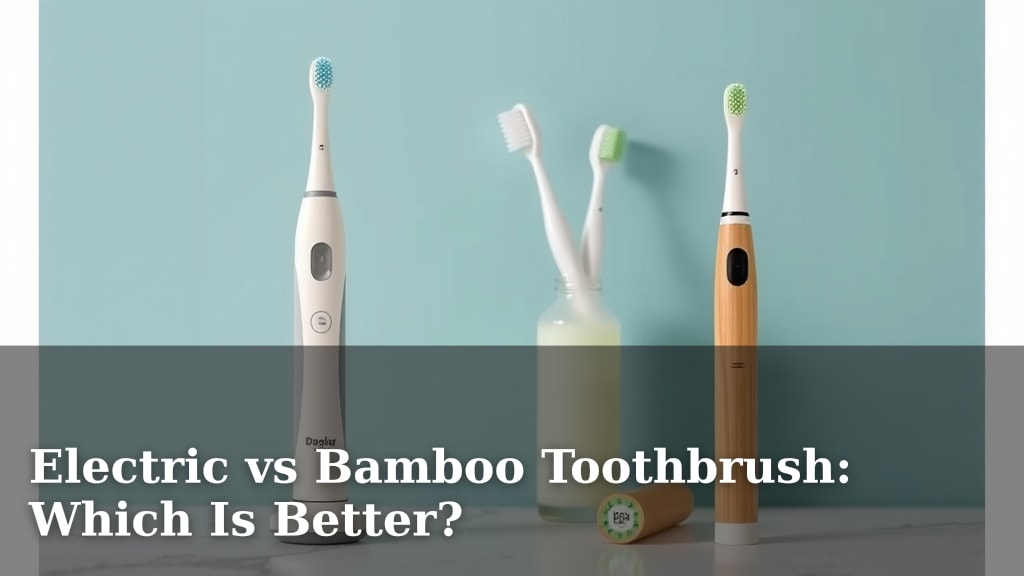
Electric vs Bamboo Toothbrush: Which Is Better?
When deciding between an electric and a bamboo toothbrush, neither is definitively “better” for everyone. Your best choice depends on your priorities, such as environmental impact and cleaning effectiveness. We found that electric toothbrushes offer superior plaque removal, while bamboo toothbrushes are the clear winner for sustainability.
Choosing a toothbrush involves balancing personal dental health needs with a desire to be eco-friendly. Many people wonder if the convenience of an electric brush outweighs the green appeal of bamboo. Both have unique benefits and drawbacks that are worth considering for your daily routine and the planet.
- Electric toothbrushes generally remove more plaque than manual ones.
- Bamboo toothbrushes are biodegradable and reduce plastic waste.
- Your oral health goals are a key factor in the decision.
- Environmental consciousness plays a big role for many consumers.
Let’s break down what makes each type of toothbrush stand out so you can make the best choice for your smile and the Earth.
Electric Versus Bamboo: Making Your Best Toothbrush Choice
When you’re standing in the toothbrush aisle, or scrolling online, you’ll see quite a few options. Two big contenders are the electric toothbrush and the bamboo toothbrush. We found that understanding what each brings to the table helps you pick the right one. Your dental health and your environmental footprint are both important. Let’s look at how they stack up.
How Well Do They Clean Your Teeth?
The primary job of any toothbrush is to clean your teeth. It removes plaque and food debris. This helps prevent cavities and gum disease. We’ve researched how effective each type is at this important task.
The Power of Electric Toothbrushes
Electric toothbrushes have moving heads. These can oscillate, rotate, or vibrate. This action can be very effective at disrupting plaque. Many dentists and dental associations agree that electric models often do a better job. We found research that supports this. For example, guidelines from the American Dental Association (ADA) suggest that powered toothbrushes can be very effective. Some studies, like those reviewed by the Cochrane Library, indicate that electric toothbrushes can remove more plaque than manual ones. This can lead to better gum health over time.
Types of Electric Toothbrushes
There are a few main types. Oscillating-rotating brushes spin back and forth. Sonic toothbrushes vibrate at high speeds. Both aim to scrub away plaque efficiently. You might find the consistent motion easier to manage than manual brushing. It can feel like a deeper clean.
The Gentle Approach of Bamboo Toothbrushes
Bamboo toothbrushes are, at their core, manual toothbrushes. Their bristles are usually nylon, but the handle is made from bamboo. Bamboo is a fast-growing plant. It’s a natural material that biodegrades. As a manual brush, its cleaning power depends on your technique. You need to use proper brushing motions. These include gentle circles or back-and-forth strokes. The ADA recommends brushing for two minutes, twice a day. Using a bamboo toothbrush effectively requires attention to detail. You’re in control of the pressure and the movement.
Manual vs. Powered: What the Experts Say
Many dental professionals will tell you that a manual toothbrush can be just as effective as an electric one. This is true if it’s used correctly. The key is technique and consistency. However, we found that many people find it harder to achieve optimal cleaning with manual brushes. Electric models can help compensate for less-than-perfect technique. They provide a more consistent cleaning action. So, for ease of use and a potentially deeper clean, electric might have an edge.
Considering the Environmental Impact
This is where bamboo toothbrushes really shine. Plastic toothbrushes contribute to landfill waste. They can take hundreds of years to break down. Bamboo offers a more sustainable alternative. Let’s dive into the eco-aspects.
The Plastic Problem with Traditional Brushes
Think about it: billions of plastic toothbrushes are thrown away globally each year. Most of these end up in landfills or oceans. They are made from petroleum-based plastics. This isn’t great for our planet. Even recycling them can be difficult due to mixed materials. You want to do your part for the environment. Switching away from plastic feels like a good step.
Why Bamboo is a Greener Choice
Bamboo is a fantastic resource. It grows incredibly fast. It requires little to no pesticides. It also absorbs a lot of carbon dioxide. When you’re done with a bamboo toothbrush, you can often compost the handle. This is a huge advantage over plastic. You’re reducing the amount of plastic waste you create. Many brands are also working on biodegradable bristles, but nylon is still common. Even with nylon bristles, the handle’s biodegradability is a big win. We found that consumers increasingly choose bamboo for its eco-friendly appeal.
What About Electric Toothbrush Waste?
Electric toothbrushes present a different kind of environmental challenge. The device itself is electronic. It contains batteries and plastic components. When the toothbrush wears out, it becomes electronic waste (e-waste). This can be difficult to recycle. Often, these batteries contain materials that can harm the environment if not disposed of properly. Some brands offer recycling programs. But overall, the lifecycle impact is more complex than a simple bamboo brush. You have to consider the manufacturing, the energy used to charge it, and its disposal.
Cost and Convenience Factors
Your budget and your lifestyle also play a role. We’ve looked at the price tags and the day-to-day experience.
Upfront Costs and Ongoing Expenses
Bamboo toothbrushes are generally very affordable. You can buy one for a few dollars. You’ll replace it every three to four months, like any manual brush. Electric toothbrushes have a higher upfront cost. You might spend $20 to $100 or more for a good model. Replacement brush heads are also an ongoing expense. These usually need changing every three months too. So, while the initial investment is higher for electric, the cost per year can be comparable to using many manual brushes, depending on the model you choose.
Ease of Use and Travel
Electric toothbrushes can make brushing feel less like a chore. The powered motion does most of the work. This can be great for people with limited mobility or dexterity. They often come with travel cases. However, you need to remember to charge them. They can also be bulkier to pack. Bamboo toothbrushes are simple and lightweight. You don’t need to worry about batteries or charging. They are easy to toss in a bag for a weekend trip. For pure simplicity and portability, bamboo often wins.
Making Your Final Decision: A Quick Checklist
To help you decide, ask yourself these questions:
- Is removing the maximum amount of plaque your top priority?
- Are you looking for the most environmentally sustainable option?
- Do you prefer a brush that does most of the work for you?
- Are you comfortable with a higher upfront cost for a toothbrush?
- Is ease of travel without needing to charge a major factor?
- Do you want a simple, straightforward brushing experience?
By answering these, you’ll likely lean towards either the cleaning power of electric or the eco-friendliness of bamboo. Both can contribute to a healthy mouth and a more conscious lifestyle. The “better” brush is truly the one that fits your personal needs and values best.
Conclusion
You’ve seen how electric and bamboo toothbrushes cater to different needs. Electric brushes often offer superior plaque removal, which is great for your dental health. Bamboo brushes are a fantastic choice for reducing plastic waste and supporting sustainability. Your best bet is to weigh your priorities: do you want the most advanced clean, or the most eco-friendly option? Consider your budget and how each brush fits into your daily routine. Whichever you choose, make sure it encourages you to brush regularly and effectively for a healthier smile and a happier planet. Make the switch that feels right for you!
Frequently Asked Questions
How often should I replace a bamboo toothbrush?
You should replace your bamboo toothbrush just like a regular manual toothbrush, typically every three to four months. This frequency helps ensure the bristles remain effective for cleaning and prevents bacteria buildup. Look for signs of wear, like frayed bristles, to know when it’s time for a new one.
Can bamboo toothbrushes be truly biodegradable?
The bamboo handle is biodegradable and can often be composted. However, the bristles are usually made of nylon, which is a type of plastic and not biodegradable. Some brands are developing plant-based bristles, but nylon is still common. So, while the handle is eco-friendly, you still need to dispose of the bristles separately.
Are electric toothbrushes bad for the environment?
Electric toothbrushes have a more complex environmental footprint than bamboo brushes. Their manufacturing, the energy needed for charging, and their eventual disposal as e-waste contribute to environmental concerns. Recycling programs can help mitigate this, but they are generally less sustainable overall compared to a biodegradable bamboo handle.
Do I need special toothpaste for a bamboo toothbrush?
No, you don’t need special toothpaste for a bamboo toothbrush. You can use your regular toothpaste. The material of the handle doesn’t affect the type of toothpaste that works best. Just apply your preferred toothpaste to the bristles as you normally would.
Will my dentist recommend an electric or bamboo toothbrush?
Many dentists recommend electric toothbrushes for their effectiveness in plaque removal. However, they will also state that a manual toothbrush, including a bamboo one, can be just as effective if used with proper technique. Your dentist will likely encourage you to use whichever brush you are most likely to use consistently and correctly for optimal oral hygiene.