Electric Toothbrush Sonic vs Rotary: Compared
Deciding between a sonic and a rotary electric toothbrush can feel overwhelming. While both offer superior cleaning to manual brushing, sonic toothbrushes tend to be gentler and more effective at removing plaque in hard-to-reach areas. Rotary brushes often use a spinning head that scrubs surfaces more directly.
Choosing the right electric toothbrush depends on your specific needs and dental preferences. You might be wondering which one will leave your mouth feeling cleanest or which is better for sensitive gums. We found that sonic technology offers a unique oscillating motion that can be very effective.
- Sonic brushes vibrate at high speeds for a gentler clean.
- Rotary brushes use a circular scrubbing motion.
- Both are better than manual toothbrushes for plaque removal.
- Your personal comfort and dentist’s recommendation are key.
Let’s walk through the key differences between sonic and rotary electric toothbrushes so you can make the best choice for your smile.
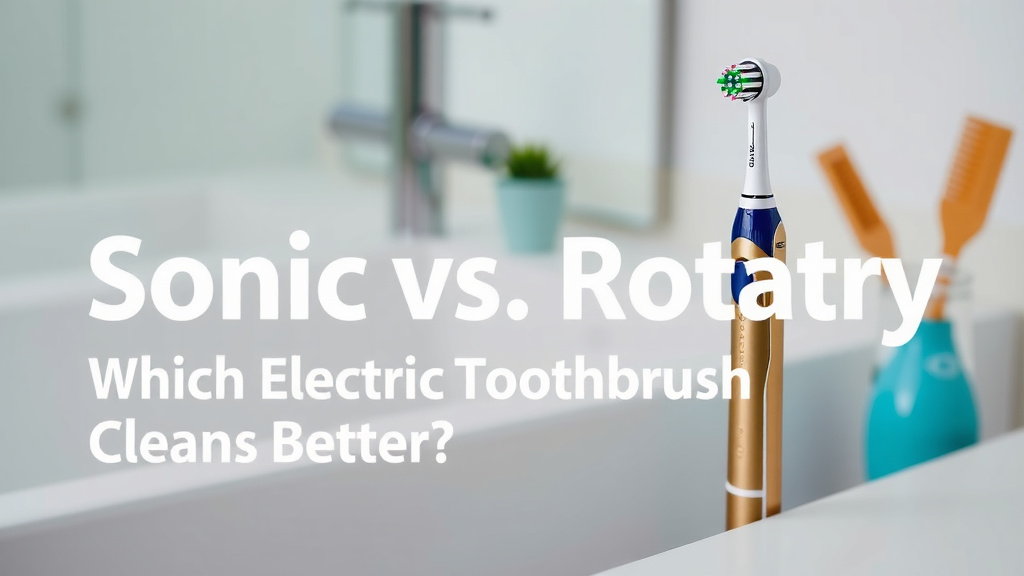
Sonic vs. Rotary: Which Electric Toothbrush Cleans Better?
You’re looking to upgrade your brushing game. That’s fantastic! Both sonic and rotary electric toothbrushes can give you a dentist-clean feeling at home. But they work differently. We found that understanding these differences can help you pick the one that’s best for your smile.
Think of it like cleaning your kitchen. A sonic brush is like a high-powered microfiber cloth. It vibrates super fast, creating tiny waves that sweep away plaque. A rotary brush is more like a scrub brush. It has a spinning head that physically scrubs the tooth surface.
We’ve researched how each type cleans. Let’s break down what that means for you.
How Sonic Toothbrushes Work
Sonic toothbrushes are known for their high-frequency vibrations. These vibrations move the brush head back and forth very rapidly. We found that this motion creates dynamic cleaning action. It can even clean a little beyond where the bristles touch.
The Sonic Cleaning Mechanism
Imagine your toothbrush buzzing like a tiny, happy bee. That’s a sonic brush! It vibrates between 24,000 and 48,000 times per minute. This speed is incredible. It helps to create fluid dynamics. This means the toothpaste and water mixture is pushed around your mouth. It can reach tight spots manual brushes miss.
Gentle Yet Effective Cleaning
Many people find sonic brushes to be gentler on their gums. This is because the cleaning action is less about harsh scrubbing. It’s more about the high-speed vibrations and the resulting fluid movement. If you have sensitive gums or are prone to brushing too hard, a sonic brush might be a great fit for you.
Benefits of Sonic Technology
Research suggests sonic toothbrushes are very good at removing plaque. They can be especially effective along the gumline and between teeth. We found that their unique cleaning action helps break up plaque. This makes it easier to rinse away.
- High vibration speeds for effective cleaning.
- Creates fluid dynamics to clean hard-to-reach areas.
- Often recommended for sensitive gums.
- Can help reduce plaque buildup effectively.
How Rotary Toothbrushes Work
Rotary toothbrushes, also called oscillating-rotating brushes, feature a small, round brush head. This head spins and moves back and forth in a scrubbing motion. Many dentists have historically favored this style for its direct plaque removal power.
The Rotary Cleaning Mechanism
Picture a tiny power scrubber for your teeth. That’s essentially a rotary brush. The round head rotates and pulses. It’s designed to cup each tooth. It then scrubs away plaque. Some models also have pulsating movements to loosen plaque before scrubbing.
Deep Cleaning Power
The main advantage of rotary brushes is their direct scrubbing action. The oscillating head can feel very thorough. We found that this method is highly effective at removing plaque from tooth surfaces. It’s like a mini-polishing for your teeth with every brush.
Benefits of Rotary Technology
Rotary brushes are excellent for targeting specific areas. They can get into crevices and around fillings or crowns. Many users report a feeling of exceptional cleanliness after using one. The American Dental Association (ADA) notes that powered toothbrushes, including rotary models, are generally effective for plaque removal (ADA).
- Small, round head targets individual teeth.
- Oscillating and pulsating motions for scrubbing.
- Excellent for surface plaque removal.
- Can feel very powerful and effective.
Sonic vs. Rotary: A Direct Comparison
So, how do these two types stack up against each other? It often comes down to your personal preference and dental needs.
We put together a quick table to highlight the main differences. This can help you visualize which might be a better fit for your daily routine.
| Feature | Sonic Toothbrush | Rotary Toothbrush |
|---|---|---|
| Brush Head Motion | High-speed side-to-side vibration | Circular scrubbing, often with pulsations |
| Cleaning Action | Fluid dynamics, sweeps away plaque | Direct scrubbing, cups and polishes teeth |
| Plaque Removal | Excellent, especially in hard-to-reach areas | Excellent, especially on tooth surfaces |
| Gum Sensitivity | Generally gentler | Can be more intense for some users |
| Learning Curve | Lower, similar to manual brushing | Slightly higher, requires proper angling |
| Typical Cost | Mid to high range | Mid to high range |
Which is Better for You?
If you have sensitive gums, a sonic toothbrush might be your best bet. Its vibrating action is less abrasive. Many dental professionals recommend them for people who tend to brush too hard. Research suggests that over-brushing can damage gums and enamel (CDC).
Rotary brushes, on the other hand, offer a very satisfying, deep clean. If you love that feeling of scrubbing your teeth squeaky clean, a rotary brush might be for you. You just need to be mindful of applying the right pressure. Many rotary models come with pressure sensors to help with this.
Making Your Final Choice
Ultimately, the best electric toothbrush is the one you’ll use consistently and correctly. Both sonic and rotary technologies have been shown to be superior to manual brushing for plaque removal and gum health.
Here’s a little checklist to help you think about your decision:
- Do you have sensitive gums?
- Do you tend to brush too hard?
- Do you prefer a gentle vibration or a scrubbing feel?
- Are you looking for maximum plaque removal in tight spots?
- What does your dentist recommend for your specific needs?
No matter which type you choose, remember to replace your brush head regularly. Most dentists recommend doing this every three to four months, or sooner if the bristles look worn (Mayo Clinic). Your oral health is worth this small investment!
Conclusion
You’ve learned a lot about sonic and rotary electric toothbrushes! Both offer a powerful upgrade from manual brushing. Sonic brushes provide a gentle, high-speed vibration that cleans effectively, especially for sensitive gums and hard-to-reach spots. Rotary brushes use a direct scrubbing action that feels very thorough on tooth surfaces.
The best choice for you really comes down to your personal comfort and specific dental needs. If you have sensitive gums, a sonic might be ideal. If you love a deep scrubbing sensation, a rotary could be your pick. We found that consistency is key, so choose the brush you’ll use faithfully.
Your next step? Consider your own mouth feel and talk to your dentist. Make the switch to an electric toothbrush that makes you excited to brush for a healthier smile!
Frequently Asked Questions
Which toothbrush type is better for receding gums?
For receding gums, a sonic toothbrush is often recommended. Its high-speed vibrations create fluid dynamics that clean gently. This motion is less likely to irritate sensitive gum tissue compared to the direct scrubbing of a rotary brush. We found that gentleness is key when gums are compromised.
Can electric toothbrushes damage my enamel?
Both sonic and rotary electric toothbrushes can be safe for enamel when used correctly. It’s important not to apply too much pressure. Many electric toothbrushes, especially rotary ones, come with pressure sensors. These alert you if you’re brushing too hard, helping to protect your enamel.
How often should I replace the brush head on my electric toothbrush?
Most manufacturers and dentists recommend replacing your electric toothbrush head every three to four months. You should also replace it sooner if the bristles become visibly frayed or worn. Worn bristles are less effective at cleaning and can even damage your gums.
Are sonic toothbrushes quieter than rotary ones?
Generally, yes. Sonic toothbrushes tend to produce a buzzing sound due to their high-frequency vibrations. Rotary toothbrushes can sometimes be louder because of the motor driving the spinning and oscillating head. We found that user perception of noise can vary, though.
Which type of electric toothbrush is best for braces?
Both sonic and rotary toothbrushes can be effective for cleaning around braces. However, the smaller, round head of a rotary brush might make it easier to navigate around brackets and wires. Some sonic brushes also offer specialized brush heads designed for orthodontic care. We recommend consulting your orthodontist for their specific advice.