How Long Should You Brush With Electric Brush?
When you’re brushing with an electric toothbrush, the general recommendation is to brush for two minutes total. This ensures you give each quadrant of your mouth adequate attention. Dentists agree that this duration is key for effective plaque removal and a healthy smile. Aim for 30 seconds per section.
But is it just about the timer? Not quite. We found that many people wonder if they’re brushing correctly with their electric tool. It’s more than just holding it there; it’s about technique and coverage. Many experts say focusing on gentle, circular motions is more important than scrubbing.
- Brush for a total of two minutes each session.
- Divide your mouth into four sections.
- Spend about 30 seconds on each section.
- Let the electric toothbrush do the work.
- Focus on gentle placement.
So, how long should you really be brushing and what’s the best way to use that buzzing device? Let’s break down the simple steps to get the most out of your two minutes.
HTML structure: “`htmlTiming Your Electric Toothbrush Sessions
So, you’ve got that shiny new electric toothbrush, and you’re wondering, “How long should I actually be brushing with this thing?” The good news is, it’s pretty straightforward. Most dental professionals agree that two minutes is the sweet spot for effective cleaning.
Think of it like this: you wouldn’t try to speed-clean your whole kitchen in 30 seconds, right? Your mouth deserves a similar amount of focused attention. Two minutes allows you to cover all the bases without rushing. We found that many people aim for this duration, and it’s a solid goal.
Breaking Down Your Two Minutes: The Quadrant Method
Two minutes can feel like a long time when you’re just standing there brushing. The key to making it effective is to divide your mouth into manageable sections. Most dentists recommend dividing your mouth into four quadrants: upper right, upper left, lower right, and lower left.
This simple division helps ensure you don’t miss any spots. It’s like giving each area its own mini-cleaning session. We found that dentists often suggest spending about 30 seconds on each of these quadrants. This keeps you moving and ensures even coverage.
How to Divide and Conquer Each Quadrant
Within each 30-second quadrant, you’ll want to be systematic. You can start with the outer surfaces of your teeth, then move to the inner surfaces, and finally, the chewing surfaces. This approach ensures no tooth surface is left untouched.
Don’t forget the back molars – they can be tricky to reach! Taking a moment to gently maneuver your brush to get to those back teeth is very important. Many dental guidelines stress the importance of reaching all areas of the mouth (CDC).
Technique Matters: Let Your Brush Do the Work
One of the biggest differences with electric toothbrushes is how you use them. Unlike manual brushing where you scrub back and forth, electric brushes often use oscillating or sonic movements. This means you don’t need to apply a lot of pressure or scrub yourself.
Your job is to simply guide the brush. Think of it as placing the brush head against each tooth surface and letting the bristles do the vibrating or rotating. We found that many people initially tend to scrub, but it’s more effective to let the electric power handle the cleaning action.
Gentle Placement for Optimal Results
So, what does “guiding the brush” look like? It means holding the brush head gently against each tooth. You want to feel the bristles making contact with your tooth and gum line. Let the brush linger for a few seconds on each surface.
Many experts say that applying too much pressure can actually be counterproductive. It can wear down your enamel and irritate your gums. Gentle, consistent contact is the goal. We found that a light touch is key to avoiding damage and achieving a thorough clean.
The Gum Line: A Spot You Can’t Miss
Your gum line is where plaque loves to hide. It’s the area where your teeth meet your gums. Make sure to angle your electric toothbrush slightly towards the gum line. This helps to clean away plaque and debris that can accumulate there.
Taking that extra moment to focus on the gum line can make a big difference in preventing gum disease. Many dental resources highlight this as a critical area for brushing (American Dental Association).
Are Built-in Timers a Game Changer?
Many electric toothbrushes come equipped with built-in timers. These timers are incredibly helpful! They often signal when it’s time to move to the next quadrant, usually with a brief pause or vibration. Some even have a longer pause every 30 seconds to indicate when to switch quadrants.
These timers are designed to help you easily meet the recommended two-minute brushing time. We found that users who utilize these timers tend to be more consistent with their brushing duration. It takes the guesswork out of it.
Using Your Timer Effectively
If your brush has a timer, embrace it! Don’t stop brushing just because you hear the timer go off after two minutes. Instead, use the timer as a guide to ensure you’ve spent adequate time in each section. If you finish a quadrant early, don’t stop – move to the next!
The goal is to utilize the full two minutes effectively across all your teeth. If your timer stops, and you feel like you rushed one area, spend a little more time there. We found that consistency is more important than hitting an exact number.
What About Different Electric Toothbrush Types?
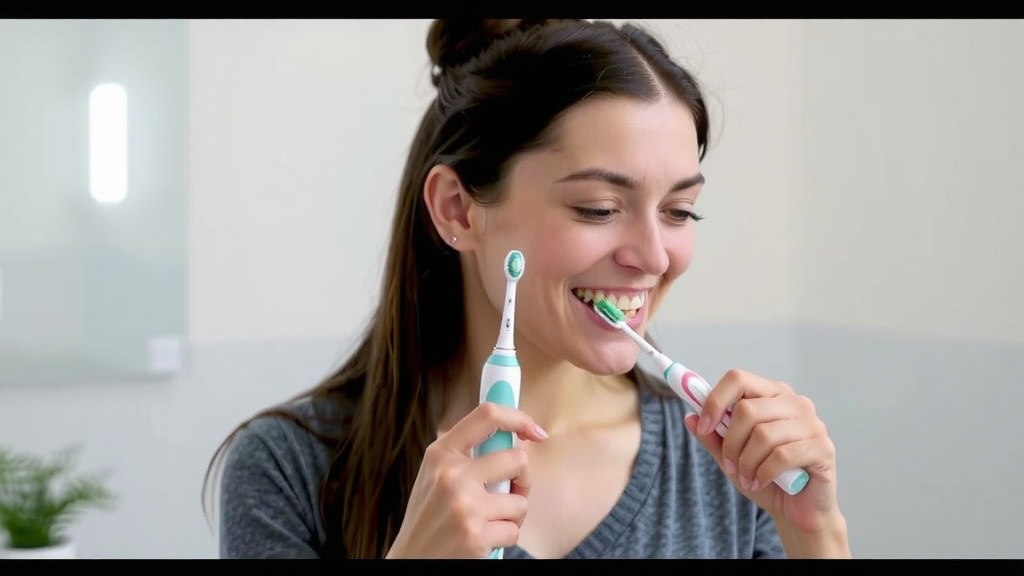
Whether you have a sonic toothbrush or an oscillating-rotating one, the general brushing time remains the same: two minutes. The difference lies more in the motion of the brush head and how you should hold it.
For sonic toothbrushes, you might find you use slightly more of a back-and-forth motion, but still very gentle. For oscillating-rotating brushes, you’ll focus on placing the head against each tooth. We found that regardless of the type, the principle of gentle guidance still applies.
Common Mistakes to Avoid
Are you accidentally doing something that’s making your brushing less effective? One common mistake is pressing too hard. As mentioned, your electric brush is powerful. You don’t need to push it into your teeth or gums. Imagine you’re trying to polish a delicate piece of fruit – that’s the kind of gentle pressure you want.
Another mistake is skipping certain areas, especially those hard-to-reach back teeth or the insides of your lower front teeth. The quadrant method with a timer helps prevent this. We found that regularly checking in the mirror can also help you spot areas you might be missing.
Are You Brushing Long Enough? A Quick Checklist
Here’s a simple way to check if you’re on the right track with your electric brushing:
- Do you brush for a full two minutes each session?
- Do you divide your mouth into four sections?
- Do you spend about 30 seconds per section?
- Do you let the brush do the work, with gentle guidance?
- Do you focus on the gum line and all tooth surfaces?
- Do you avoid pressing too hard?
Beyond Brushing Time: Overall Oral Care
While brushing for two minutes is a cornerstone of good oral hygiene, it’s part of a bigger picture. Don’t forget to floss daily! Flossing removes food particles and plaque from between your teeth, areas your toothbrush can’t reach. Many dentists will tell you that flossing is just as important as brushing (Mayo Clinic).
Regular dental check-ups are also key. Your dentist and hygienist can spot issues you might miss and provide professional cleanings. We found that a combination of proper brushing, flossing, and regular dental visits leads to the healthiest smile.
“`Conclusion
You’ve got the essentials for mastering your electric toothbrush! Remember, the goal is a thorough two-minute clean, broken into four 30-second quadrants. Let your brush’s technology do the heavy lifting with gentle guidance and focus on covering every surface, especially the gum line. Don’t forget to avoid pressing too hard, as this can do more harm than good.
The best way to ensure your oral health is to make these two minutes a consistent habit. Ready to achieve a healthier smile? Start incorporating these simple techniques into your routine today!
Frequently Asked Questions
Do I need to brush for the full two minutes if my electric toothbrush stops?
Most electric toothbrushes have built-in timers that signal the two-minute mark. However, some people finish a quadrant faster than others. If your timer stops, don’t stop brushing right away. Use it as a guide to ensure you’ve spent adequate time in each section and haven’t missed any spots.
Is it okay to use toothpaste with an electric toothbrush?
Yes, absolutely! You should always use toothpaste with your electric toothbrush. Choose a fluoride toothpaste for the best cavity protection. Apply a small amount, about the size of a pea, and let the electric brush distribute it across your teeth.
How often should I replace the brush head on my electric toothbrush?
It’s recommended to replace your electric toothbrush head every three to four months, or sooner if the bristles become frayed. Worn-out bristles are less effective at cleaning your teeth and can even damage your gums.
Can I brush my teeth for longer than two minutes with an electric toothbrush?
While two minutes is the recommended minimum for effective cleaning, brushing for slightly longer won’t typically cause harm, provided you’re using gentle pressure. However, excessive brushing could potentially lead to gum irritation or enamel wear. Stick to the two-minute guideline to be safe.
What’s the difference in brushing technique for sonic vs. oscillating electric toothbrushes?
With sonic toothbrushes, you might use a slightly more sweeping motion, letting the vibrations do the work. Oscillating-rotating brushes require you to place the head against each tooth and let it pivot. In both cases, the key is gentle guidance and avoiding scrubbing.