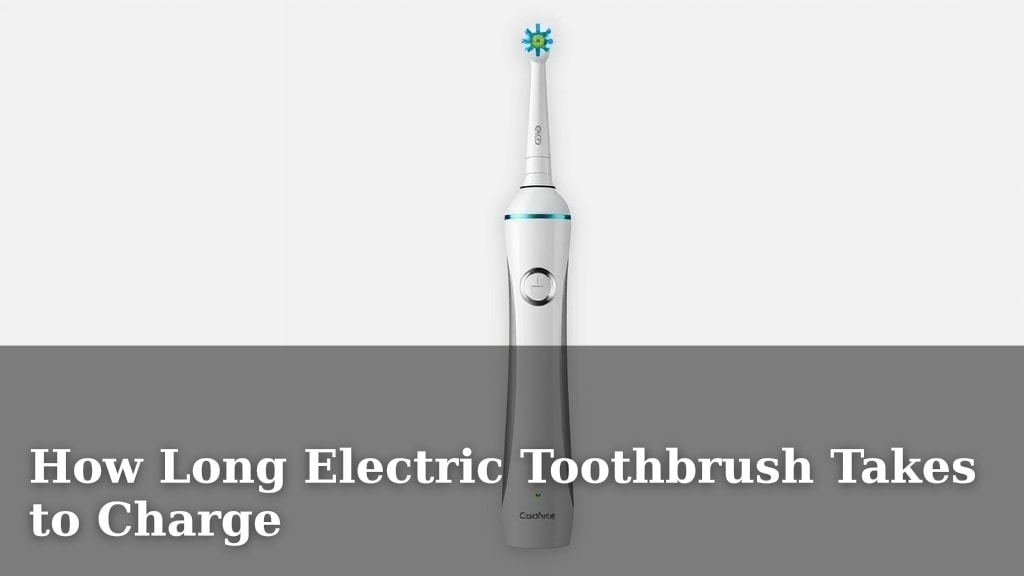
How Long Electric Toothbrush Takes to Charge
Most electric toothbrushes take between 6 to 12 hours to fully charge. Some advanced models might charge faster, sometimes in as little as 3 to 5 hours. The battery life after a full charge typically lasts for two weeks or more, making those longer charging times more manageable.
You’re probably wondering how long you’ll be without your trusty electric toothbrush. We found that charge times vary quite a bit between brands and models. Factors like battery capacity and charging technology play a big role. Don’t worry, you won’t be stuck waiting for days!
- Most brushes need 6-12 hours to charge fully.
- Some can charge in as little as 3-5 hours.
- A full charge often lasts 2+ weeks.
- Check your model for exact charging times.
Let’s get into the details of electric toothbrush charging so you can keep your smile sparkling!
Understanding Your Electric Toothbrush’s Charging Time
So, you’ve got a shiny new electric toothbrush, and you’re wondering, “How long will this thing take to juice up?” It’s a common question, and the answer isn’t always a simple number. We’ve found that charging times can really depend on the specific model and brand you’re using. But don’t worry, we’ll break it down for you.
Typical Electric Toothbrush Charge Durations
Most electric toothbrushes are designed for convenience, meaning you don’t need to plug them in every single day. This convenience comes with a trade-off in charging speed. The majority of electric toothbrushes you’ll find require a full charge cycle that lasts between 6 to 12 hours. Think of it like charging your smartphone overnight; you plug it in before bed and it’s ready by morning.
This longer charging time is generally not an issue for most users. Why? Because a single full charge can power your toothbrush for a significant period. We found that many models can last for two weeks or even longer on a single charge when used twice a day, as recommended by dental professionals (American Dental Association).
Why the Longer Charge Time?
The reason behind the extended charging period is often related to the battery technology used. Many electric toothbrushes employ Nickel-Metal Hydride (NiMH) or Lithium-ion (Li-ion) batteries. These batteries are chosen for their longevity and reliability, offering a good balance between power and lifespan.
To protect these batteries and ensure their longevity, manufacturers often implement a slower charging process. This prevents overheating and degradation of the battery over time. It’s like giving your toothbrush a nice, gentle recharge rather than a quick jolt. This careful approach means your toothbrush will likely serve you well for years to come.
Faster Charging Options Available
Now, if you’re someone who needs a quicker top-up or often forgets to charge, you’re in luck! Technology is always advancing, and some newer or more premium electric toothbrush models offer significantly faster charging capabilities. These advanced models might be fully charged in as little as 3 to 5 hours. Some even have quick-charge features that can give you enough power for a couple of brushing sessions in just a few minutes.
These faster charging options are often found in higher-end models and may use more sophisticated charging circuits or higher-capacity Li-ion batteries. If rapid charging is a must-have for you, be sure to check the product specifications before you buy. You might be surprised at how quickly some brushes can get ready to go!
Factors Influencing Charging Speed
Several elements can affect how long it takes for your electric toothbrush to reach a full charge. Understanding these can help you manage your expectations and charging routine.
Battery Capacity and Type
The size and type of the battery are primary determinants of charging time. A larger capacity battery will naturally take longer to fill up than a smaller one. As mentioned, NiMH and Li-ion batteries have different charging characteristics. Li-ion batteries, while sometimes more expensive, can often be charged faster and hold their charge longer when not in use.
Charging Technology and Base
The charging base itself plays a role. Some bases are simple inductive chargers, while others might have built-in smart charging technology. Higher-end models may use faster inductive charging or even a direct USB connection for quicker power delivery. The wattage or power output of the charging base can also influence the speed.
Battery Health and Age
Just like any rechargeable battery, the one in your electric toothbrush will degrade over time. An older battery might take longer to reach a full charge or may not hold a charge for as long as it did when it was new. If you’ve noticed your toothbrush isn’t holding a charge like it used to, it might be a sign that the battery is nearing the end of its lifespan.
How to Check Your Specific Model’s Charging Time
The best way to know for sure is to consult your toothbrush’s manual. It’s usually packed with all the essential information about your device.
Consulting the User Manual
Your toothbrush’s user manual is your best friend for all things related to its operation and maintenance. It will clearly state the recommended charging time, battery life expectancy, and any specific charging instructions. If you can’t find the physical manual, a quick search online for your toothbrush model name plus “manual PDF” will often lead you to a digital copy.
Manufacturer’s Website and Product Pages
Can’t find the manual? No problem! Manufacturers almost always provide detailed product specifications on their official websites. Look up your specific model, and you’ll likely find information about its battery and charging performance. Retailer websites where you purchased the brush may also list these details in the product description.
Tips for Optimal Charging and Battery Life
To get the most out of your electric toothbrush’s battery, follow a few simple best practices. These can help ensure your brush is always ready when you need it and lasts as long as possible.
- Full Charge Cycles: For NiMH batteries, performing a full charge and discharge occasionally can help maintain battery health. Li-ion batteries are more forgiving and don’t strictly require this, but avoiding constant trickle charging can be beneficial.
- Avoid Extreme Temperatures: Don’t leave your toothbrush or its charger in excessively hot or cold environments. Extreme temperatures can degrade battery performance over time.
- Use the Correct Charger: Always use the charger that came with your toothbrush or a compatible replacement recommended by the manufacturer. Using the wrong charger could be ineffective or even damaging.
- Regular Brushing: Brushing twice a day as recommended by dentists (American Dental Association) means you’re using the battery regularly, which is generally good for battery health.
Here’s a quick checklist to keep your toothbrush powered up:
- Read your toothbrush manual for exact charge times.
- Note if your model offers fast charging.
- Understand that 6-12 hours is standard for many.
- Know that a full charge typically lasts 2+ weeks.
- Charge overnight for convenience.
- Consider battery health for older brushes.
| Brand/Model Type | Typical Full Charge Time | Approximate Battery Life (after full charge) |
|---|---|---|
| Standard Models (e.g., Oral-B Pro, Philips Sonicare Series 2/3) | 12-24 hours | 10-14 days |
| Mid-Range Models (e.g., Oral-B iO Series, Philips Sonicare Series 4/5) | 8-16 hours | 14-21 days |
| Premium/Advanced Models (e.g., Oral-B iO Series, Philips Sonicare Series 7/9) | 3-8 hours | 14-30+ days |
Conclusion
You’ve learned that most electric toothbrushes need about 6 to 12 hours to charge fully, with some advanced models doing it much faster. Remember, this longer charge time is usually a good thing, as it typically provides two weeks or more of use. Your toothbrush’s battery life and charging speed depend on its specific model and battery type. To ensure you get the best performance and longevity from your device, always check your user manual for specific charging instructions. Now you can confidently keep your electric toothbrush powered up for a consistently clean smile!
Frequently Asked Questions
Can I leave my electric toothbrush on the charger all the time?
For most modern electric toothbrushes, especially those with Lithium-ion batteries, leaving them on the charger is generally fine. The charging systems are designed to prevent overcharging. However, to maximize battery lifespan, some manufacturers suggest removing it from the charger occasionally.
Why does my electric toothbrush take so long to charge?
The longer charging time is often due to the battery technology used, like Nickel-Metal Hydride (NiMH), which requires a slower charge to protect the battery. This method helps ensure the battery lasts longer and maintains its capacity over time, providing extended use between charges.
My electric toothbrush battery doesn’t last as long as it used to. What’s wrong?
It’s common for rechargeable batteries to degrade over time. If your toothbrush isn’t holding a charge like it used to, the battery may be nearing the end of its lifespan. This often happens after several years of regular use and charging.
Can I use a different brand’s charger for my electric toothbrush?
It’s best to always use the charger that came with your electric toothbrush or a specifically approved replacement from the manufacturer. Using an incompatible charger might not charge your toothbrush effectively or could potentially damage the battery or charging components.
How can I speed up the charging process if I’m in a hurry?
Some newer or premium models offer quick-charge features that can provide enough power for a few uses in just a few minutes. If your model doesn’t have this, the best approach is to ensure it’s fully charged when you have the time, perhaps overnight, to avoid needing a quick charge.